
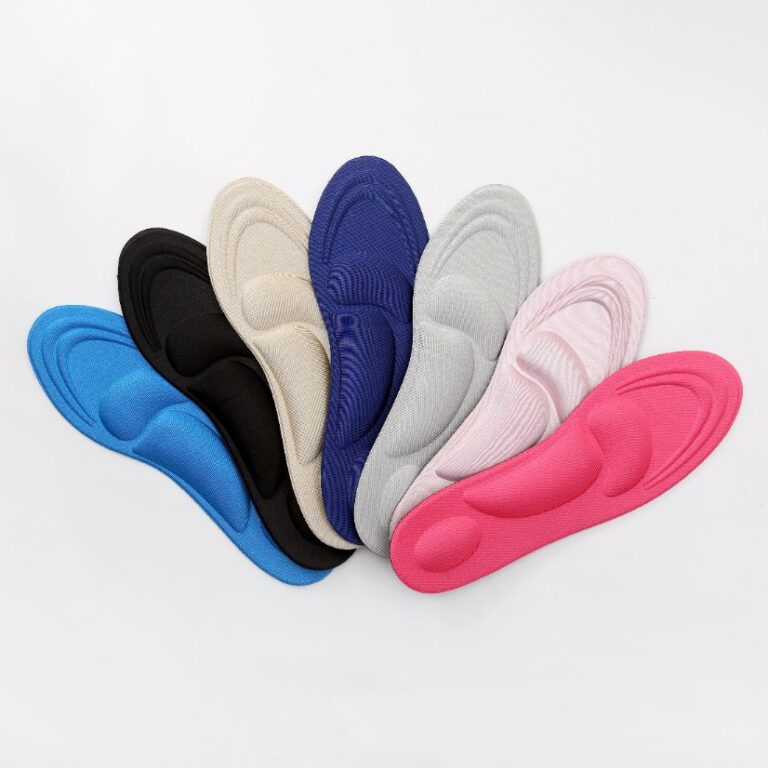
Write an insole order line with separate fields for the catalogue model, the supplier-confirmed version, the requested variant and the quoted unit. Then ask the supplier to explain how that unit relates to the proposed packaging. A model code identifies an item reference; it is not a pack quantity. A photograph showing several colors is a visual reference, not evidence that a mixed assortment or a particular pack is being offered.
Start with a stable model reference
Canxiang Insoles lists different catalogue entries, including references named 2488-2 Sponge Arch Massage Insoles and 5101 Arch Support Insoles. A buyer can use the exact product URLs and model wording to identify the starting point of an inquiry. Preserve the punctuation in a model code. Changing a hyphen or dropping a suffix can make it harder for the supplier to connect an order line to the intended catalogue entry.
Treat descriptive words in those catalogue names as labels used to find the item. This procurement checklist does not verify a material composition, an anatomical effect or a performance claim. Ask the supplier to identify the exact quoted version and provide the specifications relevant to that offer. If the supplier uses an internal item number different from the public name, record both references together rather than replacing one without explanation.
Give variant choices their own fields
A model name may be accompanied by a requested color or another buyer-defined variant. Keep those choices outside the model-code field unless the supplier confirms that they form part of its item identifier. This makes an unanswered color request visible instead of hiding it inside a long combined description. A buyer can then ask which choices belong to the quoted version and which require a separate response.
The selected catalogue photograph displays several colors together. It helps explain why a visual selection needs a written reference. It does not establish that every color is available, that the group is supplied together or that all pictured items share the same specification. Identify the buyer’s requested appearance and ask the supplier to confirm its own color reference. Keep any alternative proposal on a separate approval line.
Make the quotation unit explicit
Words such as piece, pair, pack and carton can refer to different levels of an order. Ask the supplier to state the meaning of the unit used in its quotation and the relationship between the proposed packaging levels. Do not calculate a total from an image or assume that a familiar commercial term has the same definition in every offer.
Separate field | Information to request | Reason to keep it separate
Catalogue reference | Exact model wording and product URL | Identifies the inquiry starting point
Quoted version | Supplier’s applicable item or revision | Makes substitutions visible
Requested variant | Buyer reference and supplier confirmation | Avoids treating pictured colors as availability
Quotation unit | Exact meaning of the unit being priced | Prevents unlike-unit comparisons
Packaging relationship | Contents of each proposed packaging level | Keeps pack details independent of model codes
Outstanding questions | Unconfirmed fields and responsible contact | Prevents blanks becoming assumed terms
Reconcile the offer before comparing totals
A useful purchasing comparison begins with comparable scope. If two supplier responses use different units or describe different versions, place those differences beside the figures before evaluating the offers. Ask for clarification where the contents of a unit are unclear. This does not require a buyer to invent a standard pack. It requires the supplier’s proposed pack to be stated clearly enough that the buyer can understand the quotation.
Keep quantity requests, supplier-confirmed packaging and quoted prices in their own fields. A buyer’s requested quantity is not proof of a supplier’s minimum order, and a proposed packaging arrangement is not a confirmed delivery commitment. Commercial details should come from the current written offer. Leave unavailable figures pending rather than filling them with a familiar number from another model or an earlier purchase.
Carry the same identity into packing documents
Once an offer is agreed, the model reference and confirmed variant should remain recognizable in the buyer’s purchasing record. If a supplier proposes abbreviated wording on a packing document, keep a clear mapping to the approved order line. The receiving team should not have to infer a model from a color photograph when several similar-looking references are being handled together.
For international teams, preserve model codes across translated documents and spell out the unit descriptions used in the commercial agreement. When a revision changes the item or packaging relationship, identify the affected order line and request confirmation before treating the revision as accepted. This article provides a way to organize an RFQ; it does not establish stock availability, delivery timing, product certification or the terms of a supplier’s future offer.
• Keep model identity, requested appearance and quotation unit in separate fields.
• Ask the supplier to define its proposed packaging rather than counting objects in a photo.
• Retain a visible mapping when public and supplier-internal item references differ.
Frequently asked questions
Is the number inside a model code a pack quantity?
Do not treat it as a quantity unless the supplier explicitly confirms that meaning. Keep the catalogue code intact as an item reference, and request the proposed packaging contents in a separate field.
Can a multi-color photo be used as an assortment order?
Use it to communicate a visual reference, then request confirmation of the offered colors and packaging arrangement. The picture itself does not establish availability, assortment contents or whether the displayed items are supplied together.
What if a quotation says only pack?
Ask the supplier to define what that pack contains and how it relates to the item being quoted. Record the answer before comparing totals with an offer expressed in another unit. Do not assume a conversion based on earlier orders.
What should remain open when the supplier has not answered?
Keep the unconfirmed model version, variant, quotation unit or packaging relationship explicitly pending. A clear unanswered field is more useful than an apparently complete line built from assumptions. Confirm current commercial terms separately with the supplier.
Product and contact references
Catalogue reference: confirm matching item: https://cxinsoles.com/product/2488-2-sponge-arch-massage-insoles/
Related catalogue reference: https://cxinsoles.com/product/5101-arch-support-insoles/
Contact Canxiang Insoles: https://cxinsoles.com/contact/
Canxiang Insoles blog: https://cxinsoles.com/blog/