
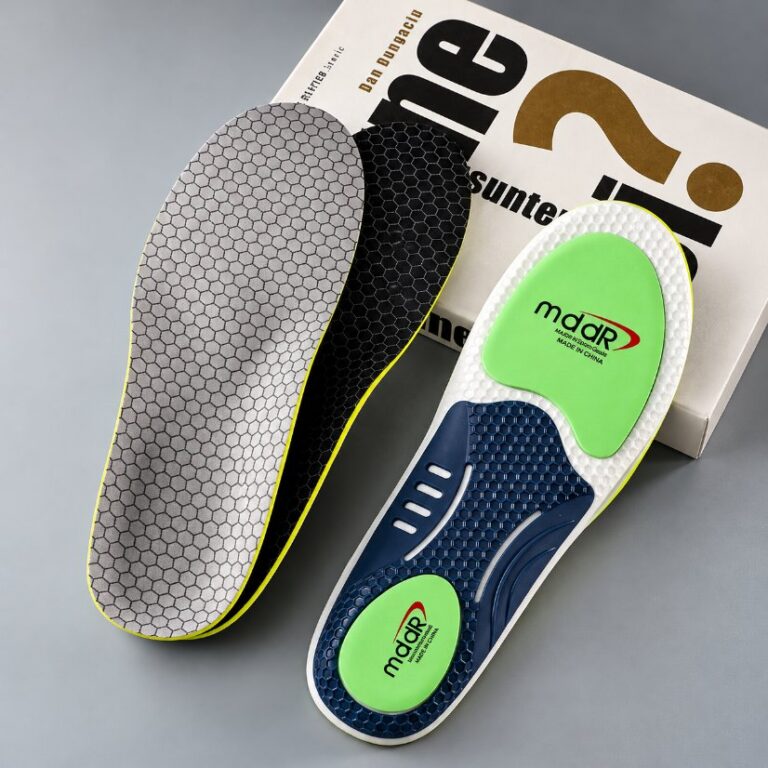
Before approving an insole sample, ask the supplier to identify the left and right pieces and label each photographed view as top or underside. Request an image that shows the proposed pair together, followed by separate views when an edge or surface is hidden. Multiple insoles in a catalogue photo may show colors, different surfaces or several references. They do not automatically establish the exact pair that the supplier proposes to send.
Explain the sample question before requesting more photos
A buyer often receives a photograph that looks complete while still lacking the information needed to identify a pair. One object may show a top surface and another an underside. Two objects may belong to different variants. State the unresolved question directly: which piece is left, which piece is right, and which views represent the same proposed sample? That makes the request more useful than simply asking for additional pictures.
The Canxiang Insoles catalogue contains a reference labeled 5101 Arch Support Insoles. Use its product link to identify the catalogue entry, while asking the supplier to confirm the offered version. The product name is an inquiry label here. It does not establish a medical benefit, a particular construction or suitability for an individual wearer. Those subjects should not be filled in from the name or the image.
Separate a pair view from a surface comparison
The selected official photograph includes top-looking surfaces and a contrasting underside. It is a useful reference for asking which views belong together. It should not be treated as proof that every object pictured is included in a sample shipment. Ask the supplier to place the intended pair in one clearly labeled image, with enough separation to see both silhouettes. A supplier can then identify any additional image as another surface of the same item or as a different reference.
Avoid assigning left or right solely from how a picture is rotated on a screen. Describe the orientation expected in the supplier’s reply and ask for explicit labels. If the buyer’s own reference uses a different viewpoint, keep both conventions visible until they are reconciled. The objective is consistent identification across the sample request, the physical sample label and the approval record.
Use a view map that can travel with the sample
A short view map prevents a useful photograph from becoming detached from its meaning when several colleagues exchange files. Give the image a reference and identify what it is intended to show. Record a missing view as a question rather than using another product’s photograph as a substitute.
Reference view | Identification request | Record to keep
Pair together | Label intended left and right pieces | One confirmed sample-pair image
Left top | Confirm sample and visible surface | Matching item reference and photo label
Right top | Confirm the corresponding piece | Matching pair reference
Underside | State which piece is shown | Explicit side and orientation label
Additional detail | Identify any different version | Separate variant reference or pending answer
Keep visible markings in their proper role
A photograph may contain lettering, a logo-like mark or a label on the pictured surface. Those details can help two people locate the same image. They do not, on their own, prove who owns a mark, whether a buyer can reproduce it or whether that marked version is available in the proposed offer. Ask the supplier to distinguish the catalogue photograph from the labeling requested for the actual sample.
When a buyer needs an unmarked reference or a specific label arrangement, write that as a request for confirmation. Do not silently remove a visible mark from the purchasing description while continuing to rely on that picture for the rest of the sample identity. Keep any supplier response with the image so that a later approver can see exactly what was and was not confirmed.
Confirm the physical sample against the agreed view map
When the sample arrives, the receiving team should be able to connect it to the same reference used in the supplier’s reply. Record the sample label and identify any visible difference in the arrangement or orientation. If a piece cannot be matched confidently, ask for clarification before turning that sample into an approved purchasing reference. This is an identity check, not an assessment of medical suitability or an independent performance test.
For purchasing teams working across countries, use the same photo identifiers in every language version of the request. Preserve the original catalogue model reference instead of translating it into a different code. Keep a supplier-proposed substitution separate until it is approved. Sample identity, order quantities and commercial terms can then be handled without making the photograph carry information that it never established.
• Ask for side labels rather than inferring them from screen orientation.
• Keep top and underside images tied to one identified sample.
• Separate visual identification from performance and labeling permissions.
Frequently asked questions
Do two insoles in a photo always represent a supplied pair?
No. A photograph may compare surfaces, colors or different references. Ask the supplier to identify the exact left and right pieces proposed for the sample and to show them together. Keep that confirmation with the image.
Can a buyer infer the underside from the top view?
A top view leaves the opposite surface unconfirmed. Request the actual underside view of the identified sample when it matters to approval. A picture of another model is a separate reference, even if its outline looks similar.
Does a visible mark establish the supplier’s brand rights?
No. The mark can identify the photographed reference, but ownership, authorization and the labeling permitted for an order require separate confirmation. This article makes no claim about the commercial rights attached to a visible catalogue mark.
What if the supplier sends a different-looking sample?
Record the difference and ask whether the supplier intended a substitution or another version. Do not transfer approval automatically. Update the view map only after the actual sample identity has been reconciled with the purchasing request.
Product and contact references
Catalogue reference: confirm matching item: https://cxinsoles.com/product/5101-arch-support-insoles/
Related catalogue reference: https://cxinsoles.com/product/eva-perforated-sports-insoles/
Contact Canxiang Insoles: https://cxinsoles.com/contact/
Canxiang Insoles blog: https://cxinsoles.com/blog/